

Tusi Sites (China) Inscribed on UNESCO’s World Heritage List
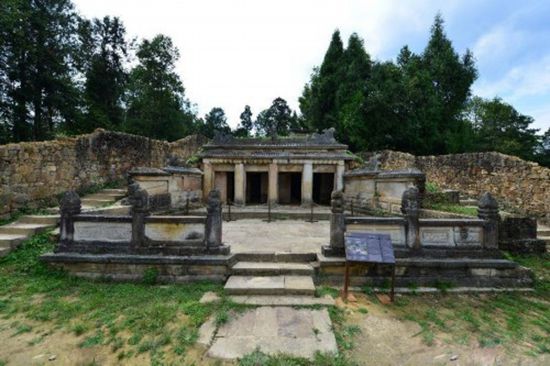
UNESCO’s World Heritage Committee endedits 39th Meeting in Bonn, Germany on July 4th 2015, inscribing 24 new sites on UNESCO’s World Heritage List and approved extensions to three existing sites. It also added three World Heritage sites to the List of World Heritage in Danger and took one off the that List. Tusi sites (China) as the 2015 project application of China, jointly represented by Yongshun Laosicheng site in Hunan Province, Tangya Tusi site in Hubei Province and Hailongtun Fortress site in Guizhou Province have been inscribed on UNESCO’s World Heritage List and have been the 48th World Heritage Site in China.
The application for World Heritage of Tusi sites (China) containing the existing Tusi sites in Guizhou, Hunan and Hubei Provinces were submitted to the World Heritage Center in March, 2014.These three sites are located in the multi-ethnic borderland of Hunan, Hubeiand Guizhou Province and are the existing sites which have large scale,complete pattern and abundant relics. The types include Tusi sites, Tusimilitary sites, Tusi officer villages, Tusi government office buildings, Tusimanors and Tusi family graves. The Tusi sites can date back to the3rd century BCE and have lasted for a long period with well preservation, which are the typical comprehensive site remaining in the period with complete and splendid Tusi system, fully embodying the systematicness, development process of the Tusi system and the management and operational mode ofthe Tusi institutions.
Yongshun Laosicheng site in Hunan Province was the ancient capital of Tusi dynasty for its 800-year-domination, also referred to as Sicheng, Laosicheng. The existing Tangya Tusi site in Hubei Province still contains the important cultural relics in the Tusi dynasty such as dolmen and stone figures and horses.It was inscribed into the provincial cultural relics protection unit by the government in 1992. Hailongtun Fortress site in Guizhou Province is a completesite to study the Tusi system and the only site which combines the large military buildings and palace buildings together in Guizhou Province.
There are 10 selection criteria for the inscription on the World Cultural Heritage List according to the regulation of UNESCO and World Heritage Committee, at least one of which shall be met by thenominated project. Tusi sites (China) accord with the article 3 and 4 which areas follows: (iii) to bear a unique or at least exceptional testimony to acultural tradition or to a civilization which is living or which has disappeared; (iv) to be an outstanding example of a type of building, architectural or technological ensemble or landscape which illustrates (a)significant stage(s) in human history. Domestic experts think that Tusi sitescontain long history, social background, cultural connotation and material relics,entirely complying with the selection criteria.
next:The Announcement on the Implementation of the Regulation on the Protection of Intangible Cultural Heritages of the Korean Nationality in Yanbian Korean Autonomous